Nuclear Weapons
It is such a supreme folly to believe that nuclear weapons are deadly only if they’re used. The fact that they exist at all, their presence in our lives, will wreak more havoc than we can begin to fathom. Nuclear weapons pervade our thinking. Control our behavior. Administer our societies. Inform our dreams. They bury themselves like meat hooks deep in the base of our brains. They are purveyors of madness. – Arundhathi Roy
Nuclear Weapons are Costly
Latest Weapons News from our Members
‘Endangered’ listing proposed for WA burrowing owls. Most nest by Tri-Cities
Tri-City Herald(Feed generated with FetchRSS)
Richland to consider power agreement key to $3B nuclear fuel plant
Tri-City Herald(Feed generated with FetchRSS)
Hanford’s old water treatment plant officially retired
Weapons Exchange Monitor(Feed generated with FetchRSS)
Dual Path Reproach email
Hanford Challenge(Feed generated with FetchRSS)
WIR, state comment period address some of grout issues at Hanford
Exchange Monitor(Feed generated with FetchRSS)
FBI arrests Energy Department employee accused of attempting to support Houthis
The Hill(Feed generated with FetchRSS)
FBI accuses Eastern WA man of providing help to foreign terrorist organization
Tri-City Herald(Feed generated with FetchRSS)
Radioactive waste tank being emptied at Hanford. It will be the last for years
Tri-City Herald(Feed generated with FetchRSS)
‘Pristine but deadly’: Visiting the most contaminated place in America
Courthouse News Service(Feed generated with FetchRSS)
Cleanup Updates – RIP HAB. Honoring 32 years of magic.
Hanford Challenge(Feed generated with FetchRSS)
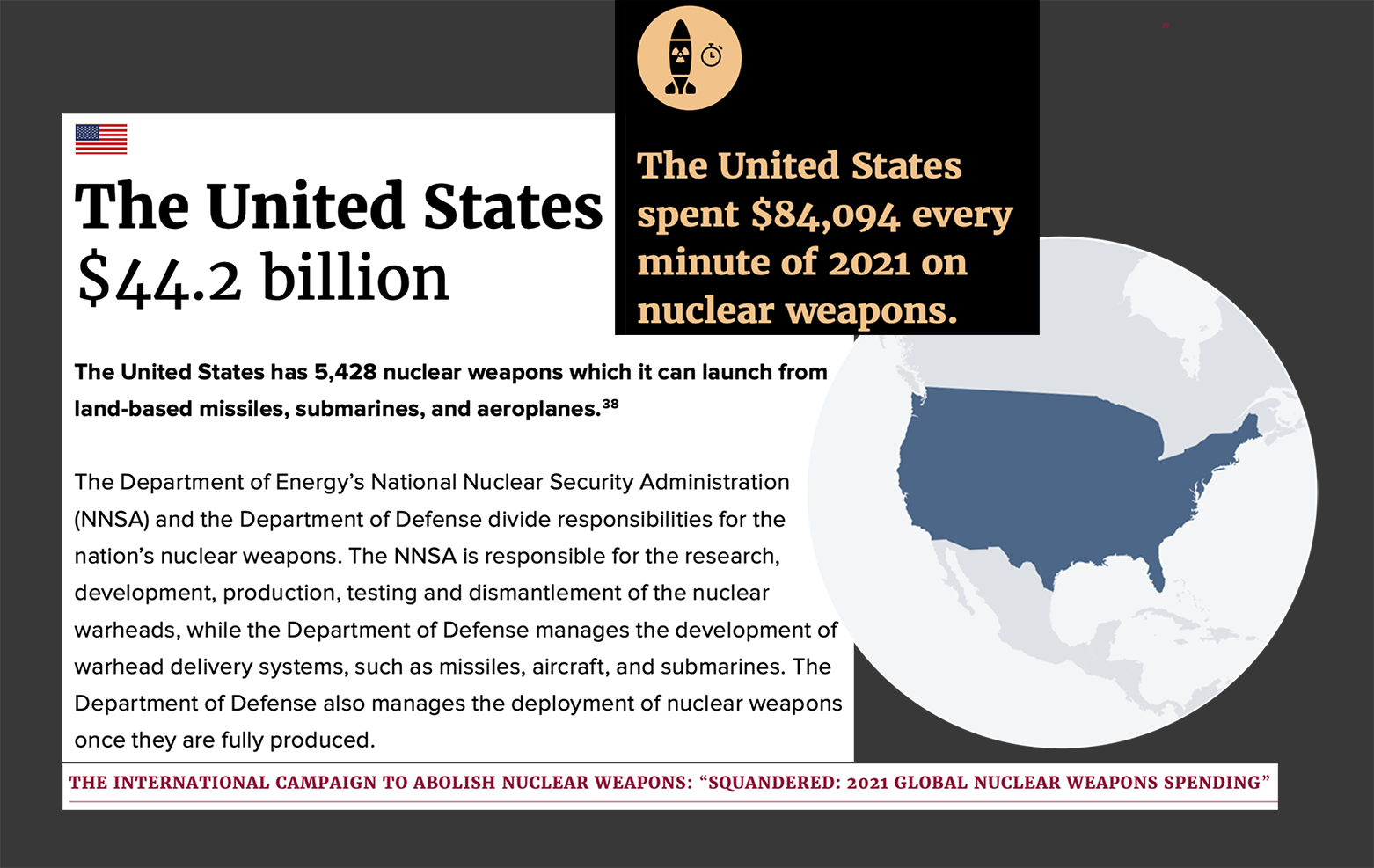
The U.S. is on track to spend between $620 billion and $661 billion on nuclear weapons and related programs over the next decade. Escalating costs associated with so-called “modernization” plans are forcing Congress to divert funds from essential programs like education, health-care, and job training to invest in a force that is bloated and dangerous. These expensive plans are plagued with cost overruns and are ridiculed by watchdog groups for their poor management.
As we negotiate bilateral and multilateral treaties to reduce the nuclear threat, the U.S. can not send the wrong message by spending unprecedented amounts on our nuclear arsenal. With the situation worsened by the Russian invasion of Ukraine in 2022, it is no longer apparent that the U.S. views disarmament as a priority. We continue to create distrust with escalating spending on the nuclear arsenal. Urge Congress to reduce spending on unwise Life Extension Programs and invest in our economic competitiveness.
Learn more about Life Extension Programs here
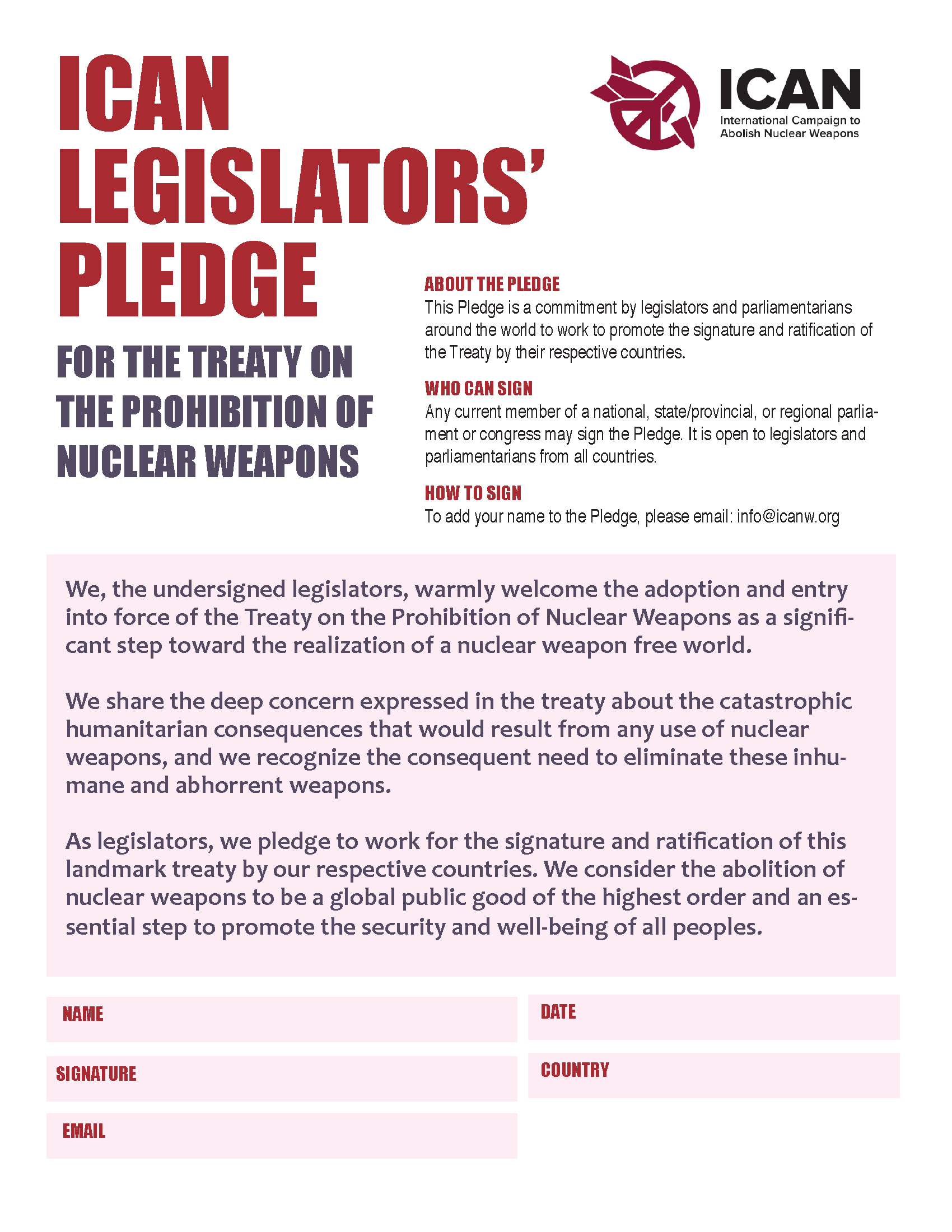 Nuclear Ban Treaty: Resources & More Info
THE U.N. TREATY ON THE PROHIBITION OF NUCLEAR WEAPONS
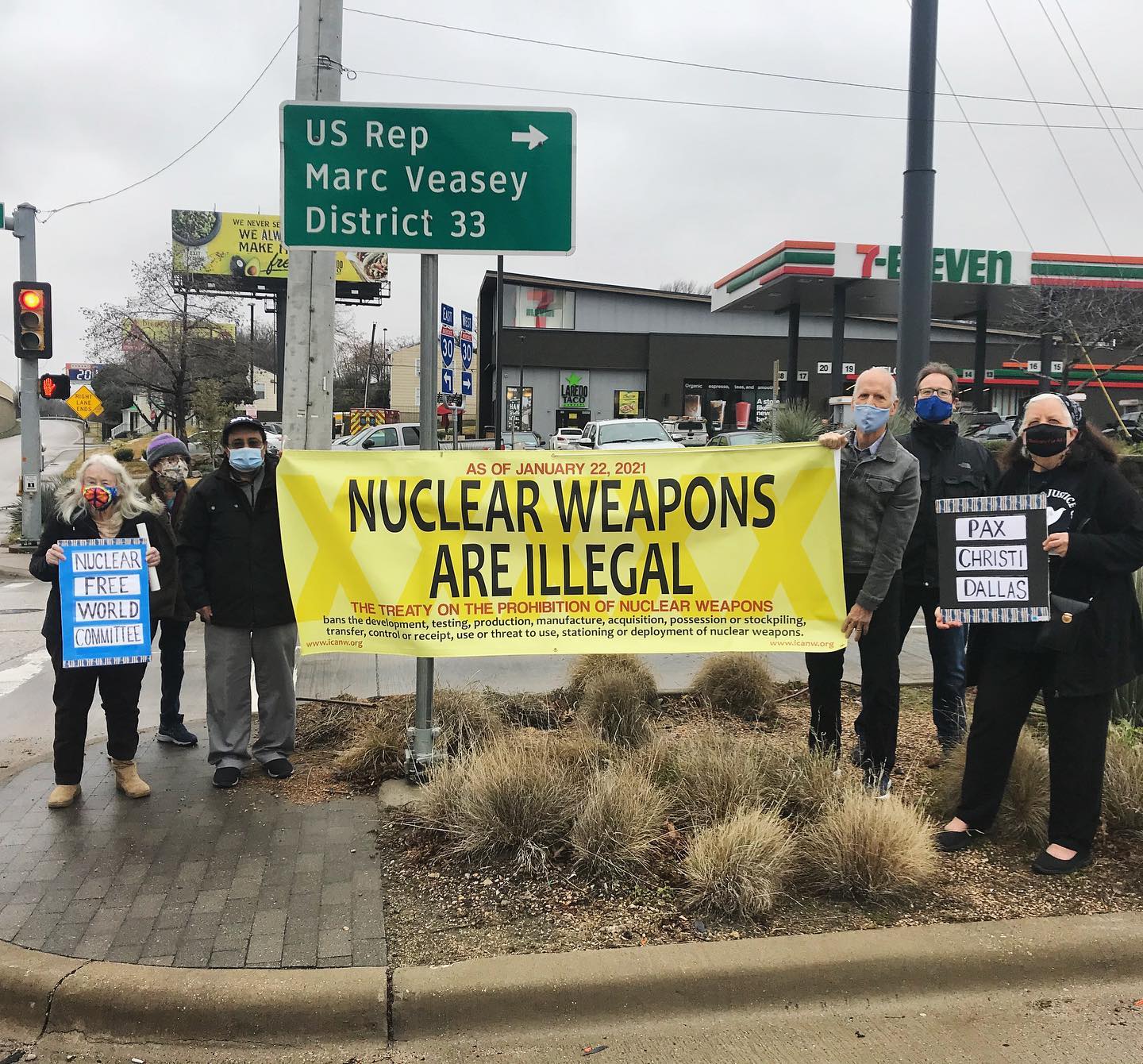
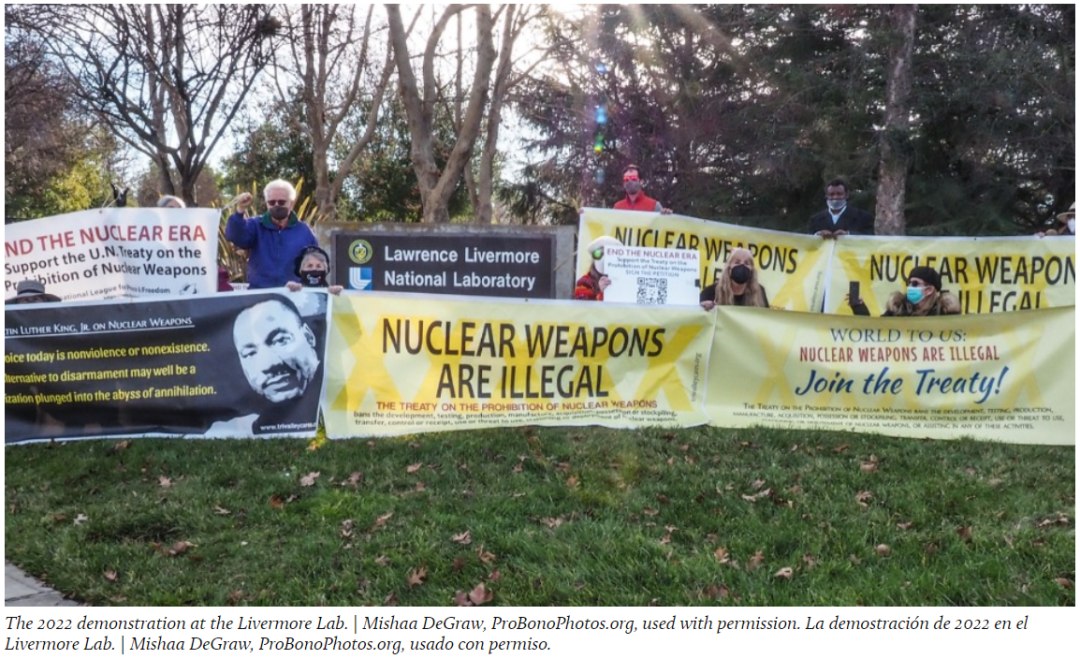
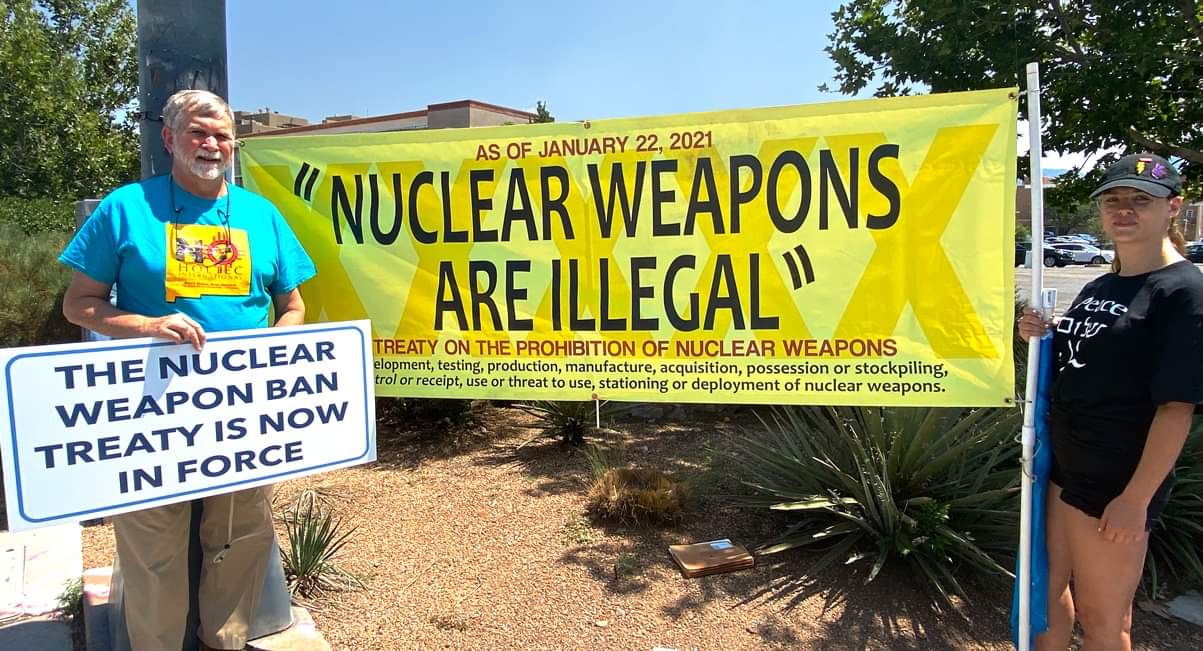
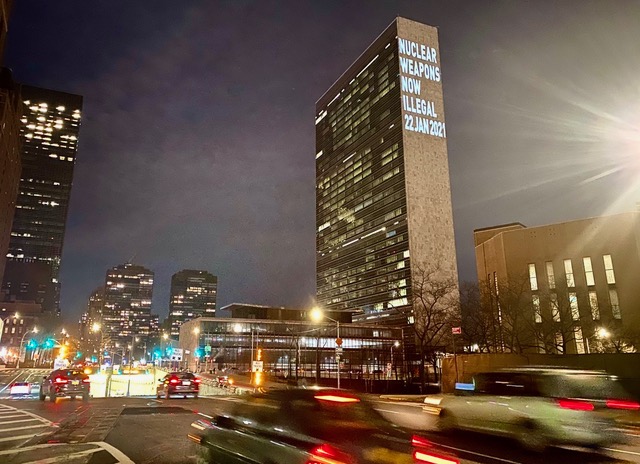
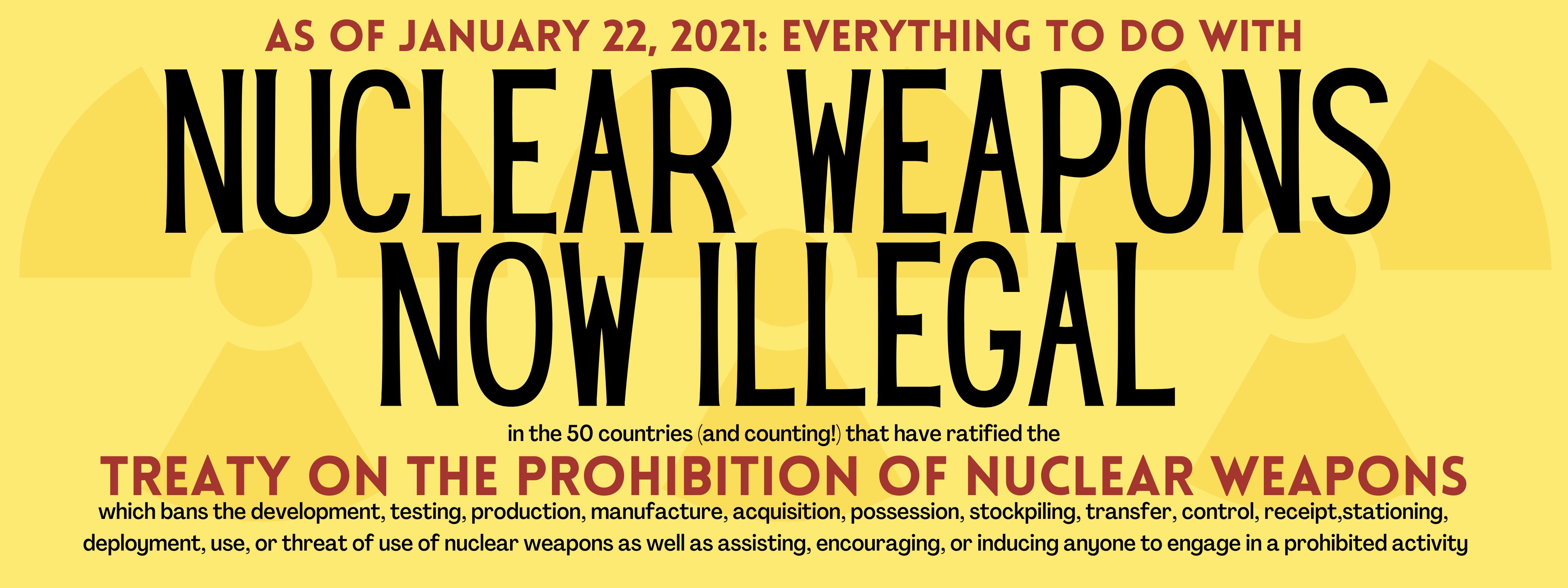
On 7 July 2017 – following a decade of advocacy by ICAN and its partners – an overwhelming majority of the world’s nations adopted a landmark global agreement to ban nuclear weapons, known officially as the Treaty on the Prohibition of Nuclear Weapons. It entered into legal force on January 22nd of this year, 2021, when the first 50 nations signed and ratified it.
Prior to the treaty’s adoption, nuclear weapons were the only weapons of mass destruction not subject to a comprehensive ban, despite their catastrophic, widespread and persistent humanitarian and environmental consequences. The new agreement fills a significant gap in international law.
It prohibits nations from developing, testing, producing, manufacturing, transferring, possessing, stockpiling, using or threatening to use nuclear weapons, or allowing nuclear weapons to be stationed on their territory. It also prohibits them from assisting, encouraging or inducing anyone to engage in any of these activities.
International Arms Control Cooperation is Building
Over the past century, world governments have increasingly looked to create laws that govern the conduct of nations in war. The institutions that work to verify these international agreements have become robust and the rules enabling their ability to provide verifiable oversight have also been strengthened. Today, the international community has over 330 international monitoring stations that provide rapid data if any country attempts to test nuclear weapons (a step in developing a nuclear weapons program). Any international agreement that would move us closer to abolition would also include robust on-the-ground inspections using lessons learned from the process the U.S. and Russia have developed over years of nuclear arms control cooperation. The alternative to serious nuclear disarmament efforts is the status-quo where countries will continue to develop nuclear weapons programs over time and we will increasingly face a world that teeters on the brink of nuclear war.
Nuclear Weapons Humanitarian Consequences are Catastrophic
Nuclear weapons are unique in their destructive power and the threat they pose to the environment and human survival. They release vast amounts of energy in the form of blast, heat and radiation. No adequate humanitarian response is possible. In to the nuclear winter scenario that many are familiar with, Physicians for Social Responsibility (PSR) studied how a regional nuclear war involving around 100 Hiroshima-sized weapons would disrupt the global climate and agricultural production so severely that more than a billion people would be at risk of famine.
In an International Physicians for the Prevention of Nuclear War report, Zero is the Only Option, experts from PSR and around the world analyzed several scenarios concerning the use of nuclear weapons. From a medical perspective, the aftermath of a nuclear attack makes any effective medical responsible infeasible. The resulting conclusions describe a level of catastrophic harm that must compel all to act to abolish these weapons.
Learn more about the humanitarian consequences of nuclear weapons at PSR and at the International Campaign to Abolish Nuclear Weapons.